
The water would not drain.
It was 6:40 on a Thursday morning in October, the 16th, and Maria Delgado had twelve minutes before she had to leave for the dental office on East Grant Road in Tucson. The water rose around her ankles. She turned it off, bent down and pulled up the little steel strainer.
It came up heavy.
Hair. Her hair. A dark, wet knot of it, far more than the few strands she was used to rinsing away. She held it under the light and did not move for what felt like a long time, while the last of the water gurgled down past her feet.
She told herself it was a one-off. She told herself that in the car, at the red light on Grant, and in the staff room while she tied her scrubs.
At 9:15, under the light over chair number three, she found out it was not.
9:15 a.m.The light over chair three
Maria is 52 and has been a hygienist for 24 years. Her patient that morning was a retired teacher who liked to watch the cleaning in a hand mirror. When Maria leaned in, the mirror caught the top of her own head under the operatory lamp.
Her part was wider. Not a lot. Enough.
She finished the cleaning. She does not remember any of it.
At lunch she sat in her car in the clinic parking lot and scrolled back through her phone to June, to her nephew's graduation in Phoenix. In those photos her ponytail was thick enough that her claw clip needed two twists. That morning it had needed one.
June was also the month she started a weekly Zepbound injection, prescribed by her doctor and covered through her husband's employer plan. She had been losing weight steadily ever since, and she had been proud of it. People at the office had noticed. Her husband had noticed.
She sat in the clinic parking lot and wondered whether she was trading her hair for it.
That night, the news made it worse.
8:30 p.m.The headline at the kitchen table
At 8:30 her sister texted a link: weight-loss drugs linked to hair loss.
It was real. In July 2026, researchers using Penn Medicine health records had published a study in The BMJ. Among adults with type 2 diabetes, people who started a GLP-1 medicine had a higher risk of alopecia than people who started two other kinds of diabetes drug. The excess was in non-scarring hair loss.
Adjusted hazard ratios for alopecia. 1.0 would mean no difference.
Source: Tang et al., The BMJ, July 22, 2026 (adults with type 2 diabetes; about 12,000 new GLP-1 users per comparison). Observational study; the authors note the absolute risk is low.
Maria read it three times at the kitchen table. Her first thought was to skip her next shot. The pen was in the fridge. Saturday was injection day.
Her second thought, the one that probably saved her a lot of grief, was to call her dermatologist first.
The appointment was eight days later. It started with a question she did not expect.
Eight days later"What did you eat yesterday?"
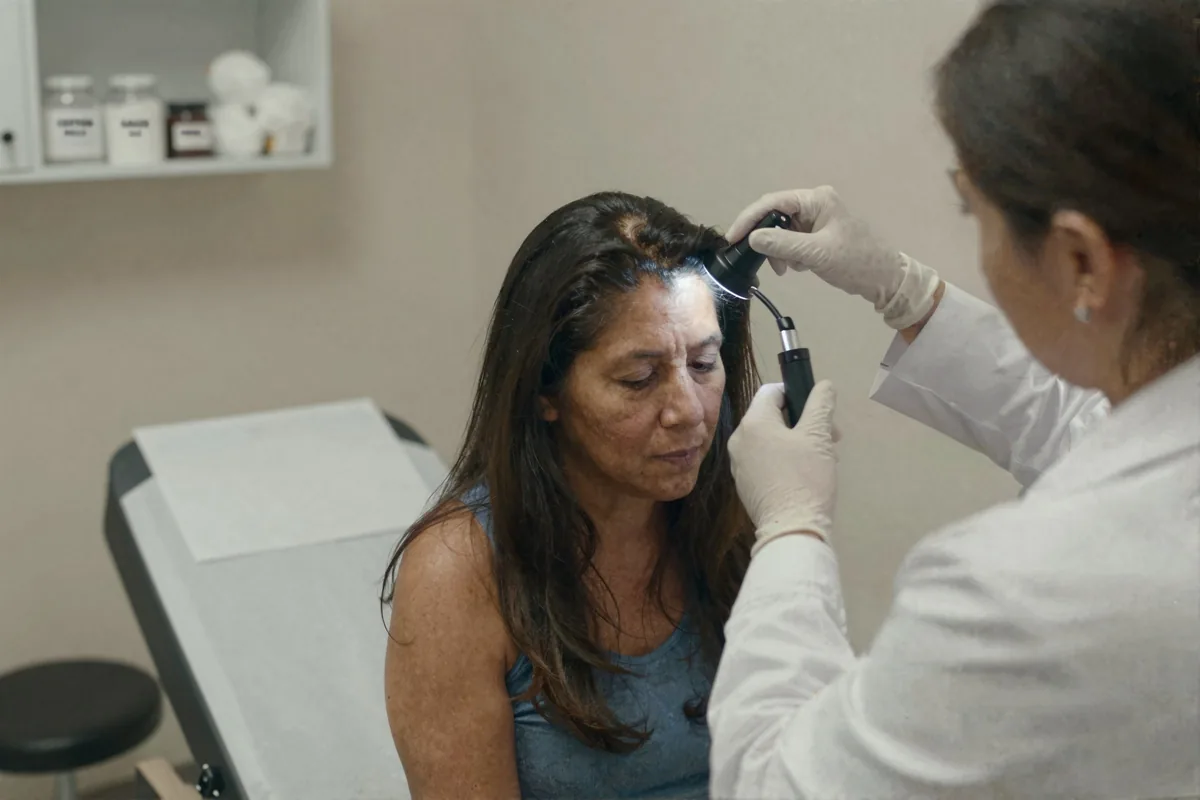
The dermatologist looked at her scalp for about two minutes. No bald patches, no redness, no scarring. Then she put the light down and asked Maria to walk her through the day before, meal by meal.
Maria started to answer and stopped.
Coffee at 6:30. Half a protein bar at 11. Some chicken and rice at 7 at night. That was all of it. On Zepbound she simply was not hungry, and she had been treating that as a bonus.
"Your hair is not falling out because of a mystery," the doctor said. "It is falling out because three months ago your body was told there was a famine."
It is falling out because three months ago your body was told there was a famine.
Maria's dermatologist
Then she wrote two words on the back of a prescription pad and slid it across: telogen effluvium.
It is the most common reason people on a GLP-1 lose hair. And most of the people who get it get their hair back.
The biologyWhy GLP-1 hair loss happens
Hair grows in cycles. At any moment most of it is growing, and a small share is resting before it falls out. A sudden stress on the body (surgery, a high fever, childbirth or rapid weight loss) can push many more hairs into the resting phase at once. A few months later they shed together. That is telogen effluvium.
The American Academy of Dermatology lists losing 20 pounds or more among the classic triggers, notes that shedding 50 to 100 hairs a day is normal, and says most people notice the excess a few months after the trigger. That delay is why GLP-1 hair loss so often surprises people: the shedding arrives just when the weight loss feels like it is going well.
Why the drain fills up months after the weight starts coming off.
- Month 0The trigger: rapid weight loss, often in the first months of treatment or after a dose increase
- Months 1 to 3Nothing visible. Many hairs have quietly switched into the resting phase
- Months 2 to 4Shedding: more hair in the brush and the drain, a thinner ponytail, a wider part
- Months 6 to 9 after it settlesShedding stops and hair generally regains its fullness
Source: American Academy of Dermatology, Hair shedding (telogen effluvium). Timing varies from person to person.
Maria did the math on the back of the pad. June, the first shot. October, the drain. Four months almost to the week.
What she wanted to know next was whether the medicine itself was the problem.
The recordWhat the drug labels say
Hair loss is printed on the labels. In the trials behind Wegovy and Zepbound, more people on the drug than on placebo reported it, and in the Zepbound trials women reported it far more often than men. No patient stopped Zepbound because of it. The Zepbound label links the reports to weight reduction.
Women on Zepbound reported hair loss more than five times as often as women on placebo.
Sources: Wegovy prescribing information (rev. 10/2025) and Zepbound prescribing information (rev. 09/2025), FDA. Trials differ and are not a head-to-head comparison.
The BMJ authors said the same thing in their own words: the absolute risk is low, an observational study cannot prove the drug caused the hair loss, and the weight loss, with the nutritional and hormonal changes that come with it, is the most likely explanation.
In other words: the famine.
Which meant the fix was not in the medicine cabinet. It was at breakfast.
NovemberThe rule by the coffee maker
Maria's fix was not glamorous.
She bought a carton of eggs and a tub of Greek yogurt and made one rule: something with protein before she leaves the house, even if it is small. The dermatologist had given her a number to aim for, and she wrote it on a sticky note and put it on the cabinet above the coffee maker.
Because she knows herself, she tied the rule to an object. She bought a once-a-day vitamin and mineral capsule, showed the label to the doctor who prescribes her Zepbound, and set the bottle next to the coffee maker. It is not a hair product, and she does not expect it to grow anything. It is a reminder. No capsule until there is protein on the plate.
She kept her Saturday shot. She told her prescriber about the shedding, and they talked about the pace of her dose increases.
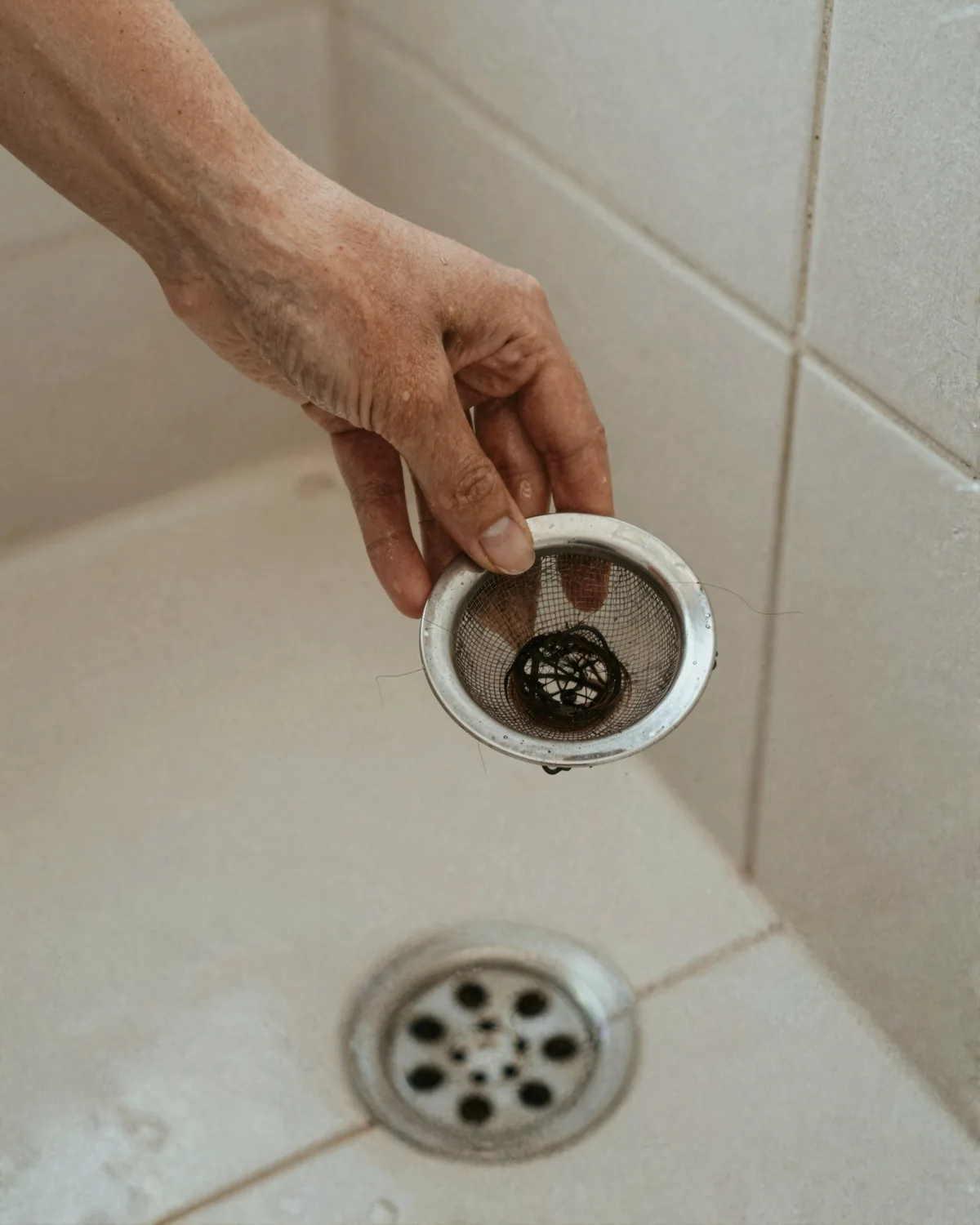
In late November she pulled the strainer up out of the shower drain again, out of habit, and made herself look.
A few hairs. A normal few.
Her part is still a little wider than it was in June. The dermatologist told her new growth would take months to show, and that she would probably see short, fine hairs along her hairline first.
Last week, under the lamp over chair three, she saw them.
Ozempic, Wegovy, Mounjaro and Zepbound hair loss: is one worse?
People search for Ozempic hair loss, semaglutide hair loss, tirzepatide hair loss and Mounjaro hair loss as if they were separate problems. They are one: fast weight loss on any of these medicines can trigger the same shedding. The labels show somewhat higher numbers for Zepbound than for Wegovy, but the trials differed. How fast you lose, how much you eat and whether you are a woman appear to matter more than the brand. Hair loss after bariatric surgery follows the same pattern.
How long does GLP-1 hair loss last?
For telogen effluvium the timeline is fairly predictable: a trigger, a few quiet months, then shedding that stops once weight loss slows and eating is steady, with hair generally regaining its fullness within six to nine months. See a board-certified dermatologist if you have round bald patches, broken hairs, a red or scaly scalp, scarring, or shedding that lasts beyond a year. Those point to other causes that need their own treatment.
Sources: American Academy of Dermatology; Obesity 2025 joint advisory (1.2 to 1.6 g per kg a day).
What helps GLP-1 hair loss
- Do not stop your medicine on your own. Talk to the clinician who prescribes it; they may slow the dose increases or focus on your nutrition. Stopping does not undo shedding that has already been set in motion.
- Eat enough protein, and eat it first. A 2025 joint advisory from four US groups, among them The Obesity Society and the American Society for Nutrition, counts excessive hair loss as a sign of nutrient deficiency and mentions 1.2 to 1.6 g of protein per kg daily as a higher target while losing weight.
- Close the nutrient gaps. The NIH Office of Dietary Supplements lists hair loss among the signs of zinc deficiency, and iron deficiency is another well-known cause of shedding. A blood test can check iron.
- Be careful with biotin. It is popular, but high doses can interfere with some lab results, so mention it to your doctor.
GLP-1 vitamins and multivitamins: what to look for
Searches for GLP-1 hair loss nearly doubled in a year, and searches for a GLP-1 multivitamin grew even faster. There is no vitamin designed for the medicine, and none is proven to stop GLP-1 hair loss. If you want a daily supplement while you eat less, look for each ingredient listed with its amount, familiar nutrients in sensible amounts, one serving a day that fits a meal you will not skip, a money-back guarantee long enough to judge it, and a label you have shown your prescriber, especially if it contains plant extracts that may lower blood sugar.
From 9,900 a month last November to 18,100 in October 2026.
Source: Google Keyword Planner, US, English, November 2025 to October 2026, pulled Nov. 28, 2026.
For the food side, our GLP-1 diet guide lists protein-rich foods and a simple meal plan. If you are still deciding on a prescription, the GLP-1 pill guide compares the Wegovy pill and Foundayo with self-pay prices, and our page on natural GLP-1 supplements covers berberine.
GLP-1 hair loss: questions people ask
Does GLP-1 cause hair loss?
Hair loss is listed as a side effect on the labels of Wegovy (3% vs. 1% on placebo in adults) and Zepbound (4% to 5% vs. 1%). A large 2026 study in The BMJ linked GLP-1 use in type 2 diabetes to a higher alopecia risk than two other diabetes drug classes, with a low absolute risk. Most experts think fast weight loss, not the drug acting on the hair follicle, is the main reason.
Is GLP-1 hair loss permanent?
Usually not. The common pattern is telogen effluvium, a temporary shedding that the American Academy of Dermatology lists after losing 20 pounds or more. Shedding typically shows up a few months after the trigger, and hair generally regains its fullness within six to nine months. Patchy bald spots, scarring or itching are different and need a dermatologist.
When does hair loss start on Ozempic or Zepbound?
Shedding from rapid weight loss usually appears a few months after the weight starts coming off, which for many people is around months two to four of treatment. That delay is why many people do not connect it to the medicine at first.
Does hair grow back after stopping a GLP-1?
In telogen effluvium the hair follicles are not destroyed, so hair usually regrows whether or not you stay on the medicine, once your weight and eating settle. Do not stop a prescription because of shedding without talking to the clinician who prescribed it; dose pace and nutrition are often adjusted first.
Why is hair loss more common in women on Zepbound?
In the Zepbound weight loss trials, hair loss was reported by 7.1% of women vs. 1.3% of women on placebo, and by 0.5% of men vs. 0% on placebo. The label links these reports to weight reduction. Researchers have not settled why women report it so much more often.
What vitamins help with GLP-1 hair loss?
No vitamin is proven to stop GLP-1 hair loss. What matters most is avoiding deficiencies while you eat less: enough protein, plus nutrients such as iron and zinc, which the NIH lists among nutrients whose deficiency is linked to hair loss. Ask your doctor before taking high-dose biotin, because it can distort some lab tests.
How much protein should I eat on a GLP-1 to protect my hair?
A 2025 joint advisory from four US nutrition and obesity groups puts the basic adult need at 0.8 g per kg a day and mentions 1.2–1.6 g per kg as a higher target while weight is coming off, or roughly 80 to 120 g daily. Your clinician or dietitian can set your number. Eating the protein on your plate first helps you get enough.
Sources and notes
- Tang et al., GLP-1 receptor agonists and alopecia in type 2 diabetes, The BMJ, July 22, 2026 (press release)
- Zepbound (tirzepatide) prescribing information, revised 09/2025, FDA
- Wegovy (semaglutide) prescribing information, revised 10/2025, FDA
- Hair shedding (telogen effluvium), American Academy of Dermatology
- Zinc fact sheet, NIH Office of Dietary Supplements
- Nutritional priorities to support GLP-1 therapy for obesity: a joint advisory, Obesity 2025 (PMC12304835)
- Google Keyword Planner, United States, English: monthly search volume November 2025 to October 2026, pulled November 28, 2026
Search volumes are Google Keyword Planner monthly estimates for the United States, which Google rounds into bands; they show direction and scale, not exact counts.